

Installation guidelines for Ciarko cooker hoods for architects and designers
A good kitchen design is not just about aesthetics and ergonomics, but also about the proper integration of appliances, which must ensure safety and ease of use.

admin
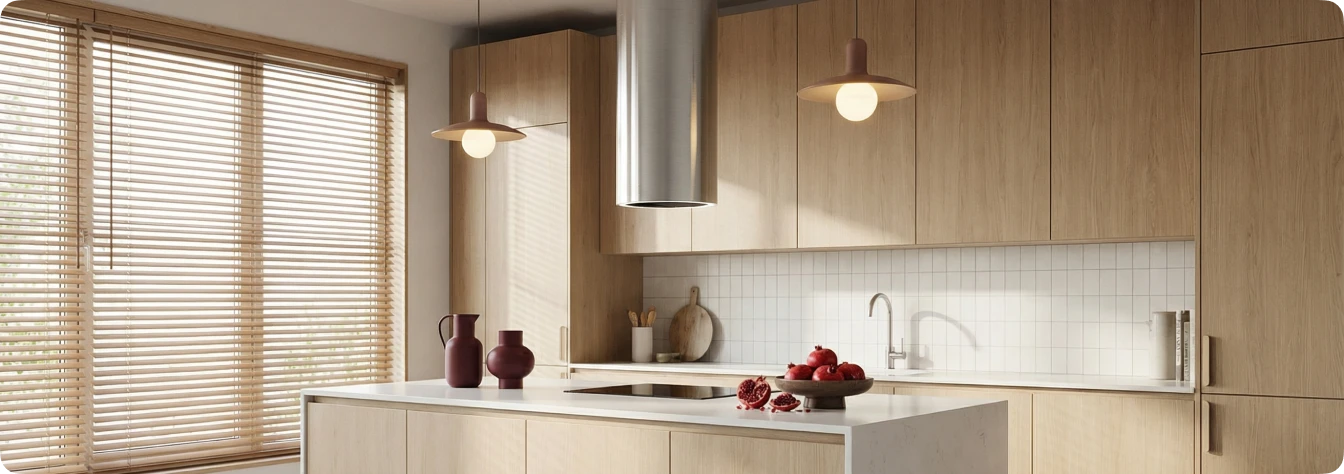
In the case of cooker hoods, this principle is particularly important. This is because correct installation affects not only the appearance, but above all the performance, noise level and durability of the entire system.
- Correct installation of the cooker hood is key to its performance, quiet operation and durability.
- The installation height, duct cross-section and method of fixing have a direct impact on the effectiveness of sound absorption.
- Ciarko models can operate in both extract and recirculation modes, adapting to the installation conditions.
- For best results, use pipes with a diameter of at least 150 mm and keep the number of bends to a minimum.
- Ciarko’s modern cooker hoods integrate with smart home systems, gesture control and LED lighting.
For over three decades, we have been working with leading design studios, bringing to market ready-made solutions that combine top-class design with advanced technology and high technical specifications. However, it is important to remember that the proper functioning of a cooker hood depends not only on the best design or the quality of its components, but also on its correct installation and use.
Below is a set of practical guidelines to help architects and designers plan the installation of Ciarko cooker hoods in a way that is functional, aesthetically pleasing and technically sound.
Installation height – the key to efficiency
The correct distance between the hob and the bottom edge of the cooker hood is the first and most important factor to consider in the design. A cooker hood fitted too low will restrict your field of vision and may be prone to getting dirty, whilst one fitted too high will significantly reduce its ability to extract steam and grease.
The recommended installation distances are:
- for electric/induction hobs: 50 – 65 cm,
- for gas hobs: 65 – 75 cm.
It is worth remembering: In ceiling-mounted and pull-out hoods, the range of the airflow is crucial; therefore, in open-plan kitchen designs, it is advisable to opt for a slightly more powerful unit or choose models with a boost function.
Maintain clear space – avoid vibrations and resonance
Every cooker hood requires free airflow and adequate structural damping. When installing it in a cupboard or wall unit, leave a gap of a few millimetres between the edges of the appliance and the furniture. If it is fitted too tightly, this may cause vibration, resonance and increased noise levels.
For ceiling-mounted or island-style cooker hoods, it is advisable to use mounting isolators or vibration-damping pads, which significantly improve the unit’s operating performance.
All Ciarko cooker hoods are designed for safe installation in wood, stone, MDF furniture, engineered wood, as well as in plasterboard fittings and suspended ceilings.
Ventilation duct cross-section – the most common design error
One of the key factors affecting the efficiency of a cooker hood is the diameter and length of the ventilation duct. A duct that is too narrow or too long causes a drop in pressure, increased noise and a loss of efficiency of up to 30–40 per cent.
Design recommendations:
- minimum duct diameter: 150 mm,
- number of bends: a maximum of two with a gentle radius,
- total duct length: up to 3 m – for longer sections, losses must be compensated for,
- avoid narrowings and sudden changes in the direction of flow.
If it is not possible to use the full diameter, it is worth considering cooker hoods featuring AdaptFlow technology, which automatically adjust their operating parameters to suit the installation conditions, thereby minimising any drop in performance.
Tip: Even the best cooker hood will not perform as intended if it is fitted incorrectly. Correct installation, the right duct cross-section and adequate access space are crucial to its effectiveness and durability.
Power supply and installation preparation
In kitchen designs, the correct positioning of the power socket is often overlooked. For most Ciarko cooker hoods, we recommend connecting to a standard 230 V socket, positioned 20–30 cm above the top edge of the appliance or in a cupboard next to it.
For models featuring LED lighting integrated with the Smart system or GestureControl, it is advisable to allow extra space for the control module. All Ciarko appliances are fitted with cables of the correct length and thermal protection, ensuring quick and safe installation.
Operating mode – extractor or recirculation?
When designing a kitchen, the architect should determine whether the extractor hood will operate in extract mode – i.e. with air being vented to a chimney – or in recirculation mode.
- Extract this is the best solution, as it offers the greatest efficiency, but it requires a suitable ventilation duct.
- Absorber this is an alternative for places where it is not possible to connect to a flue. In this case, it is advisable to use carbon or plasma filters, which trap odours and purify the air.
Ciarko cooker hoods feature technology that allows them to operate in both modes. Models equipped with the AdaptFlow system automatically adjust the airflow settings to compensate for pressure losses in recirculation mode.
Service access and maintenance
Every design should allow for easy access to filters and technical components. For ceiling-mounted or island-style cooker hoods, an access panel or removable panel should be included in the design.
Ciarko aluminium filters are reusable and can therefore be washed in the dishwasher without losing their effectiveness. Carbon filters should be replaced every 3–6 months, whilst long-life filters remain effective for up to 3 years with proper care.
It is important for designers to allow for sufficient service space, amounting to at least 10–15 cm above the appliance.
Lighting and integration with the kitchen space
Today, a cooker hood serves not only a practical purpose but also an aesthetic one. Ciarko’s modern models feature integrated LED lighting, the colour of which can be matched to the rest of the kitchen. Thanks to the LED Ambient Light system and the colour temperature adjustment function (2700–5000 K), the light can be either warm for evening lighting or cool for working.
Designers should bear in mind that a cooker hood can form part of the lighting scheme, particularly in kitchens that open onto the living room.
Ciarko’s ceiling and island models combine general lighting with air extraction, thereby reducing the number of light points required in a design.
Acoustics – user comfort
A common problem in poorly designed kitchens is excessive noise. The source of this noise is often not the extractor hood itself, but faulty installation: overly rigid mounting, a lack of insulation, or a poorly routed ventilation duct.
It is worth bearing in mind that every bend in the duct increases the noise level by around 1–2 dB, and a duct cross-section that is too small can increase it by as much as 5–7 dB.
In Ciarko models featuring BLDC motors and SilentTech technology, noise levels are kept to a minimum; however, only correct installation allows their full potential to be realised.
Integration with modern smart systems
Smart control systems are increasingly being incorporated into many modern kitchen designs. Ciarko cooker hoods are equipped with the GestureControl system (gesture control) and a delayed shut-off function; modular models also offer the option of integration with smart home systems and air quality sensors (CO₂, VOC).
For designers, this means they can design a kitchen where the extractor hood automatically responds to rising steam or the intensity of cooking, without the need for manual operation.
Conclusion: a well-designed installation is half the battle. By following Ciarko’s installation guidelines, the cooker hood will operate quietly, efficiently and reliably for many years to come, whatever the style of your kitchen.
A practical project checklist
To make it easier to work with design firms, we have put together a short checklist:
- Check the type of hob and select the correct installation height.
- Make sure the ventilation duct is at least 150 mm in diameter.
- Allow space for servicing above the appliance.
- Make sure to include provision for a 230 V power supply in the design.
- Choose a model with the appropriate operating mode (extractor or recirculating).
- Use vibration isolation and gentle bends in the ducts to prevent resonance.
- Plan lighting that is integrated into the interior design.
A brief but concise summary
A well-designed cooker hood installation is key to ensuring its performance and longevity. For architects and designers, this means striking a balance between aesthetics and technical precision.
Thanks to modern technologies such as AdaptFlow, SilentTech, BLDC and LED Ambient Light, Ciarko cooker hoods offer great installation flexibility and quiet operation, whatever the style of your kitchen.
Proper planning of the installation allows you to make the most of the appliance’s potential, both in terms of functionality and aesthetics. After all, a well-designed cooker hood not only purifies the air but also complements the character of the entire kitchen space. It looks great and works brilliantly!
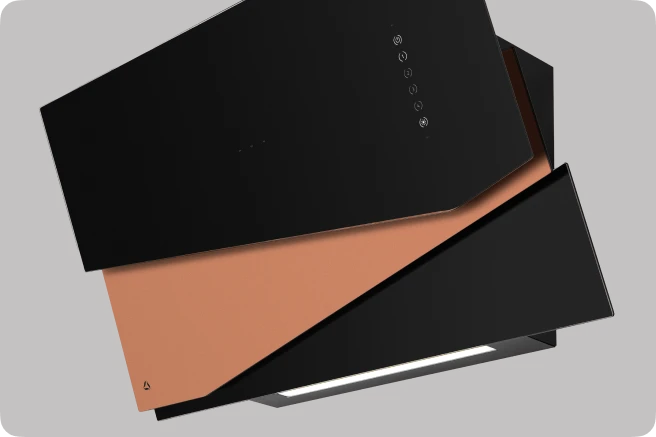
Stylish design: top-class design of Ciarko cooker hoods
The modern kitchen is no longer just a place for preparing meals. Today, it is the heart of the home. Today, it is the heart of the home.
Find out more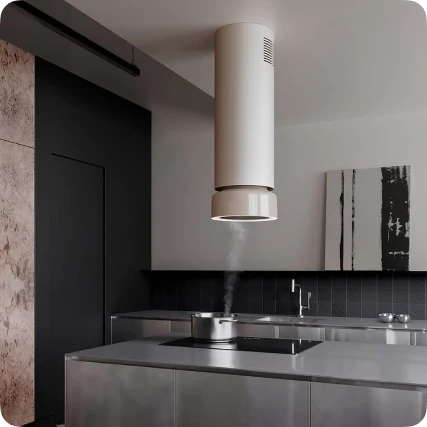
Noise emissions from cooker hoods and household appliances – facts straight from the Ciarko laboratory
The noise produced by household appliances poses absolutely no risk to hearing. However, it can be annoying and may indeed be a nuisance at times.
Find out more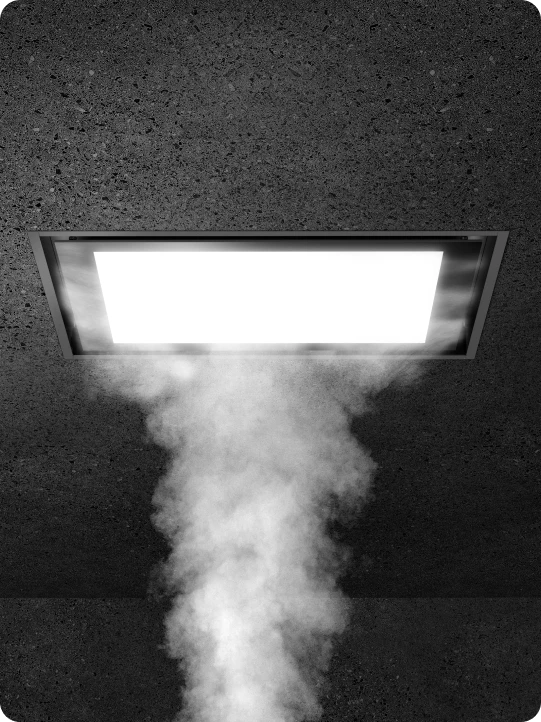
Efficiency or power? Which is more important when choosing a cooker hood, not just a Ciarko?
Ciarko has been designing and manufacturing cooker hoods for 35 years. We combine precision with quality, durability and ease of use.
Find out more