

Energy efficiency classes and the quality of Ciarko cooker hoods
In an era of growing environmental awareness and rising electricity prices, energy efficiency ratings have become one of the key factors consumers consider when purchasing household appliances.

admin
When it comes to kitchen hoods, this is often misinterpreted. Does a higher energy rating always mean a better hood? And how does it relate to the actual quality of the device? We answer!
- The energy label contains not only information about electricity consumption, but also data on air flow, lighting and noise.
- Two hoods with the same power may have different classes – this is determined by the design, efficiency and quality of the components.
- Ciarko's high energy efficiency is the result of technical quality, not a compromise on performance or design.
- The best results are achieved by combining modern engines, aerodynamics and precise assembly.
- A high energy class should go hand in hand with durability, quiet operation and real absorption efficiency.
Ciarko, as the largest Polish manufacturer of hoods, has been proving for 35 years that energy efficiency is not a compromise with performance, quality or design, but the result of a well-designed device and the use of appropriate technologies.
Tip: When designing a hood with us, pay attention to the target energy efficiency class, but don't forget about the quality of the hood and its advanced components. Economic compromises are never an option in this case.
What does the energy efficiency class mean in hoods?
Every hood available on the European Union market must have an energy label, known from a colour scale from A+++ to D (in the new system from A to G).
The label isn't just marketing information. It's a set of data that includes, among other things:
- annual energy consumption (AECh),
- air flow efficiency class (FDE),
- lighting efficiency class (LE),
- grease filtration class (GFE),
- noise level (LwA).
This means that the "A" or "B" rating on the label refers not only to energy consumption but also to the efficiency of the entire system, from the motor to the filters to the lighting. Therefore, two hoods with identical power output can have different energy classes. The differences stem from the quality of the components, the design, and the way energy is used.
Conclusion: at Ciarko, we have been following the principle for years that each element of the structure must work towards a common goal, and therefore achieve maximum efficiency with minimum energy consumption.
How is a class A or A+ hood made?
Achieving high energy efficiency isn't about limiting power. In fact, it requires precise design of every detail, from duct geometry to motor control software.
The energy efficiency class of a hood is influenced by several related factors:
High efficiency motor (BLDC)
The modern units used in Ciarko operate on a brushless principle, reducing energy loss with each rotation of the rotor. As a result, they achieve efficiency of up to 90% while maintaining high torque and quiet operation.
Aerodynamic housing design
Internal air channels are computer-aided (CFD) modeled to avoid swirls, turbulence, and pressure losses. Every curve and edge inside the enclosure matters, directly impacting performance, noise, and energy consumption.
Next-generation LED lighting
LEDs in Ciarko hoods are characterized by high luminous efficiency (up to 150 lm/W) and a color rendering index of CRI > 90. They consume several times less energy than halogens, and their durability reaches up to 50,000 hours of operation.
Low flow resistance filters
The aluminum and steel filters used in our hoods are perforated to maximize the absorbent surface while maintaining airflow. Some models also feature long-life and plasma filters, which maintain their effectiveness even after years of use.
Energy class and build quality – two different worlds
A high energy efficiency class doesn't mean high-quality workmanship. There are some A-class hoods on the market that lose some of their efficiency after just a few months of use due to excessive component wear or poor motor insulation.
That's why, at Ciarko, energy efficiency ratings are a result of quality, not a substitute. The high efficiency of our hoods is a natural result of precise design and quality control at every stage of production, from casing pressing to final testing in the acoustic laboratory.
Each model undergoes a series of durability tests, including simulation of several thousand power-on cycles, tightness measurements, and operating temperature measurements. This ensures that Ciarko hoods maintain their energy performance for many years without any decrease in performance or increase in noise.
Energy efficiency and real performance
Users sometimes choose a hood with the highest A or A+ rating, hoping to save money. In practice, however, overly restrictive motor power limits can lead to lower efficiency, especially in larger kitchens.
That's why at Ciarko, we don't compete with the letters on the label. We design hoods that combine high efficiency with real-world extraction effectiveness. In our tests, we strive for an A-class appliance to achieve an airflow of 600–800 m³/h with moderate energy consumption and minimal noise.
This means that in practice the user gains:
- quiet operation even with high air flow,
- lower energy bills,
- stable engine operation and durability of components,
- and above all – clean air in the kitchen.
Ciarko technologies supporting energy efficiency
Energy efficiency in Ciarko hoods is not a single solution, but a whole system of related technologies:
- BLDC motors – low energy consumption and very high efficiency,
- AdaptFlow – intelligent compensation of flow losses during recirculation,
- CFD Flow Design – computer optimization of air paths,
- LED EcoLight+ – lighting with high efficiency and natural light color,
- SilentTech – reduction of vibrations and noise, which indirectly reduces energy demand,
- Intelligent control – AMS sensors and modules allowing the device to be adjusted to the room conditions.
All of these technologies are developed at our factory in Sanok, where the entire process, from design to testing, takes place in one place. This allows us to have complete control over the performance of each model.
How to read an energy label?
This seemingly simple label conceals a wealth of information. Besides the main class letter, it's worth paying attention to the details:
- AECh (Annual Energy Consumption) – shows the annual energy consumption in kWh for typical use.
- FDE (Fluid Dynamic Efficiency) – air flow efficiency index, i.e. the aerodynamic efficiency of the hood.
- LE (Lighting Efficiency) – lighting efficiency, in practice it tells us how much light we get from 1 watt of energy.
- GFE (Grease Filter Efficiency) – the effectiveness of filters in retaining fat.
- LwA (Sound Power Level) – noise level, expressed in dB(A).
It's worth remembering that the difference between classes A and B is often a difference of a few watts in annual energy consumption, or just a few zlotys per year. Much more important is how the hood performs during everyday cooking, whether it effectively removes fumes, how loud it operates, and how long it maintains its performance.
Conclusion: at Ciarko, energy efficiency isn't a goal in itself, but rather a result of engineering quality. Thanks to precision design and laboratory testing, each model maintains its performance for years, offering real energy savings and the highest level of comfort.
Ciarko's philosophy – efficiency as a result of quality
At Ciarko, we look at efficiency more broadly than just the numbers on the label. Each hood is designed to use only the energy it actually needs, no more, no less.
This is made possible through precision engineering and testing conducted under controlled laboratory conditions. We analyze both airflow efficiency and the impact of vibration and temperature on component longevity.
Our philosophy is simple:
“Energy efficiency should not limit efficiency, but should support it.”
Thanks to this, Ciarko hoods offer users not only a high energy class, but also stability, reliability and quiet, comfortable operation for many years.
Conclusion: The best hood is one that combines optimal power with high efficiency. Ciarko's BLDC technology and AdaptFlow system ensure that every watt of power is utilized to its full potential – without loss, noise, and compromise.
Nuances and years of practice are decisive
Energy efficiency class is an important, but not the only, indicator of a hood's quality. A high letter on the label indicates that the device is energy-efficient, but only when combined with performance, operational efficiency, and durability, does the quality of the equipment truly shine through.
at Ciarko, each high energy class is the result of dozens of micro-design decisions, from motor selection and flow optimization to acoustic testing. That's why our hoods combine low energy consumption, high efficiency, and long service life.
It is in this combination, in the harmony between technology, quality and practical effect, that the true value of Ciarko hoods lies.
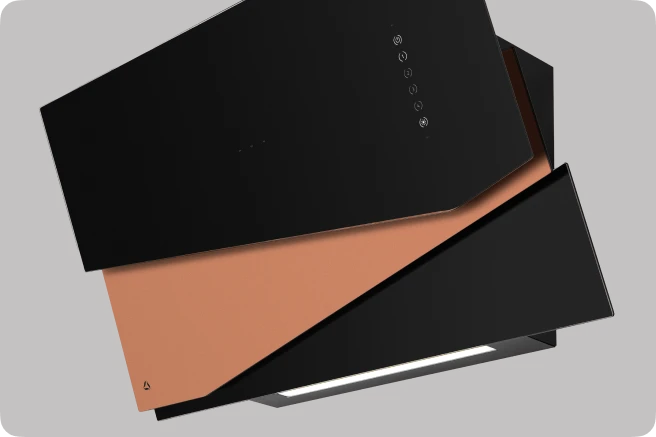
Stylish design: top-class design of Ciarko cooker hoods
The modern kitchen is no longer just a place for preparing meals. Today, it is the heart of the home. Today, it is the heart of the home.
Find out more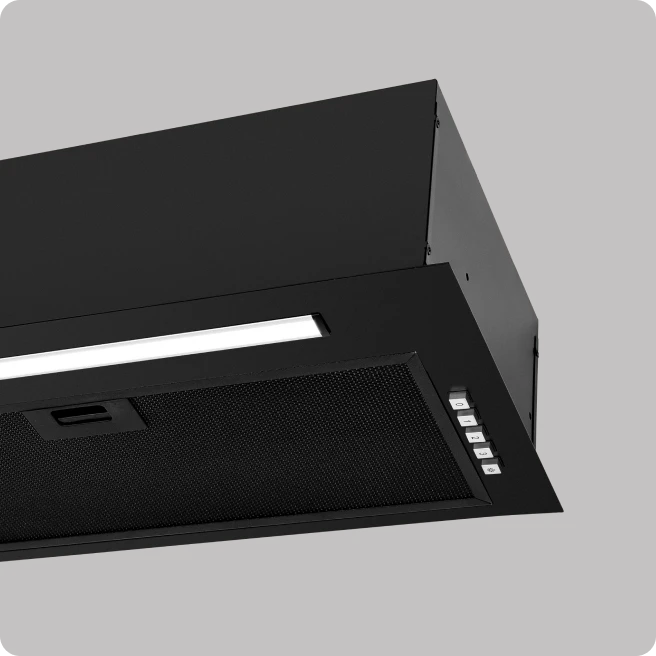
Installation guidelines for Ciarko cooker hoods for architects and designers
A good kitchen design is not just about aesthetics and ergonomics, but also about the proper integration of appliances, which must ensure safety and ease of use.
Find out more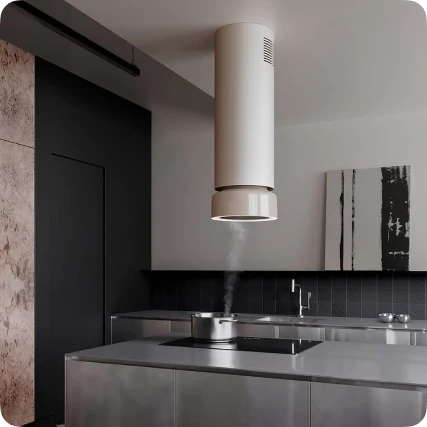
Noise emissions from cooker hoods and household appliances – facts straight from the Ciarko laboratory
The noise produced by household appliances poses absolutely no risk to hearing. However, it can be annoying and may indeed be a nuisance at times.
Find out more